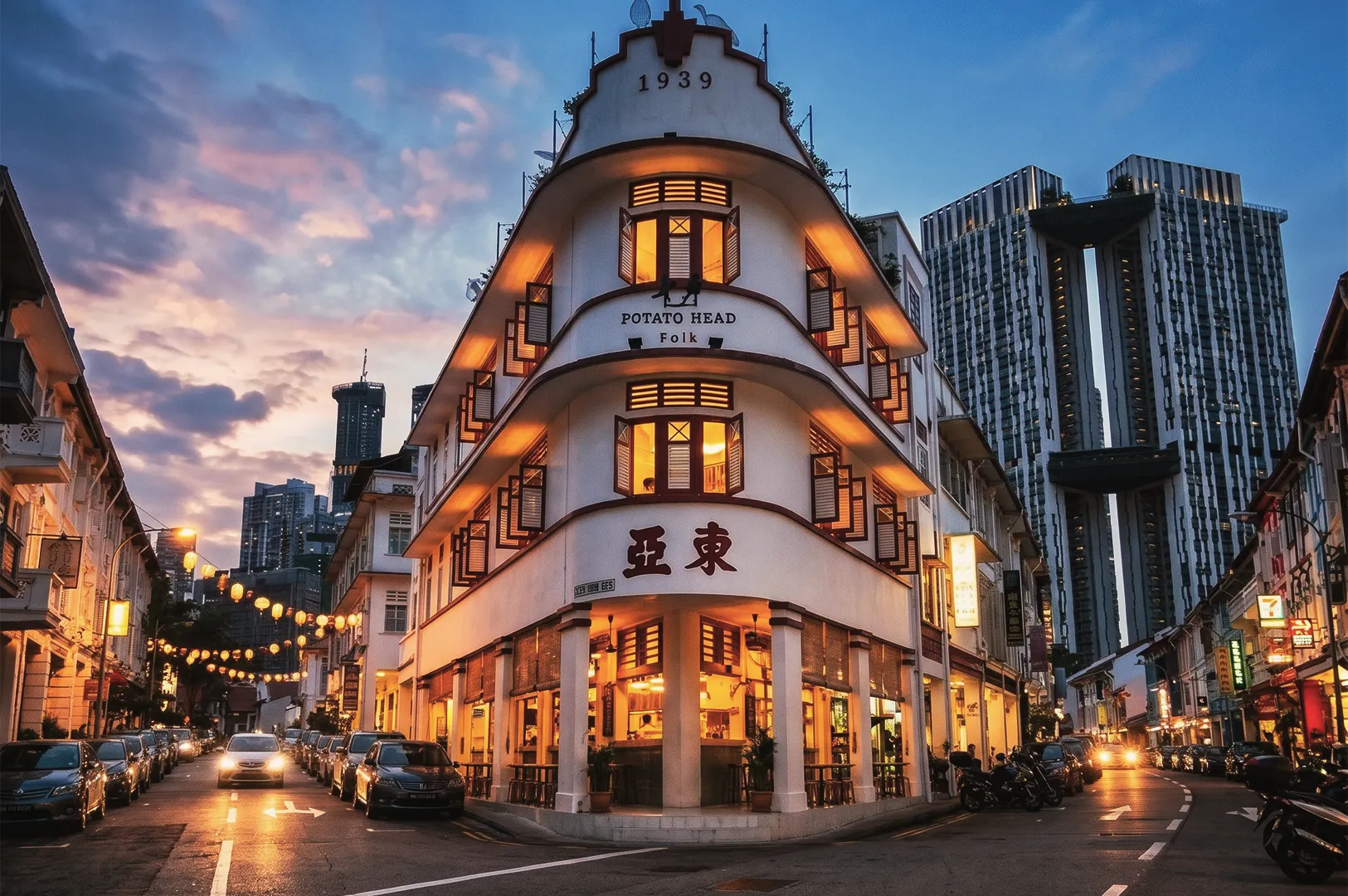
Singapore trains you to look forward. You look toward the skyline, the next MRT station, the next reservation. For years, I moved through the city that way, and I barely noticed the low rows of buildings I passed on the way to somewhere else.
Then, on an unplanned morning in Joo Chiat, I stopped. I’m not sure why. Perhaps the light caught a band of painted tiles, or a pair of timber shutters stood half open above a closed shop. I stood under a covered walkway for longer than I meant to, and the street began to explain itself.
If you’re a traveler, an architecture lover, or simply curious about Singapore beyond its modern skyline, this guide traces the history, styles, and key features of these buildings, looks at five neighborhoods where their character changes from street to street, explains the five foot way, and shares how to walk and photograph them respectfully.
Come hungry. Food is part of how you read this place. If you’d like somewhere to sit and eat between walks, read more here.
What Singapore Shophouses Actually Are
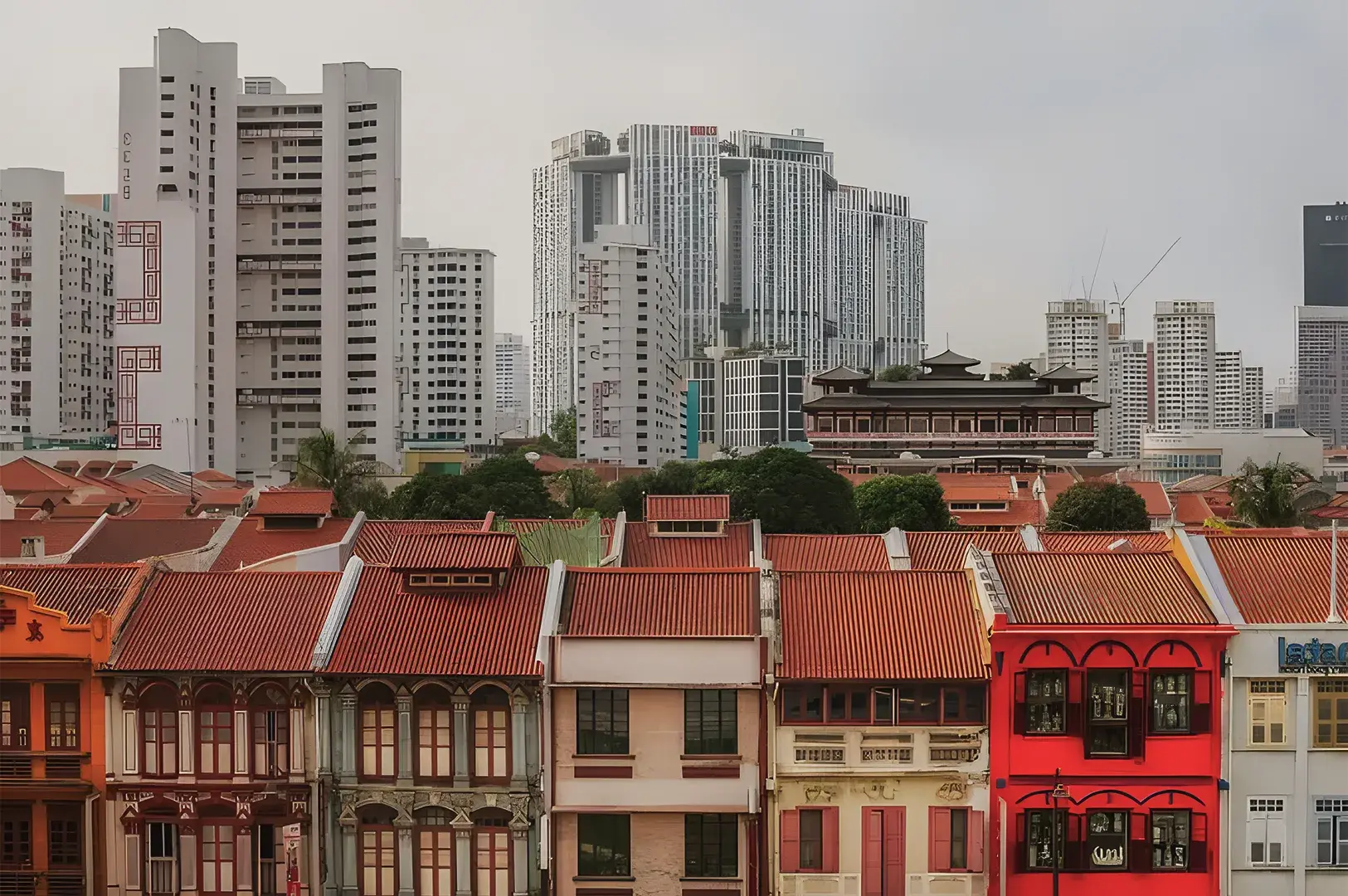
A shophouse is usually a two- or three-story terraced building, built in contiguous blocks that share common party walls. Traditionally, it was designed for both commercial and residential use, with business on the ground floor and family living space in the upper storeys. This layout also made efficient use of narrow urban land with a deep floor plan. Shophouses in Singapore were built from roughly the 1840s to the 1960s, and the Urban Redevelopment Authority protects over 6,500 shophouses across the island today. Conserved examples are also treated as high-value real estate assets because supply is limited.
That long span of time is the key. Over more than a century, the style kept changing. The earliest shophouses are plain and modest. Later ones grow more ornate, with plasterwork, tiles, and carved timber. Then come the cleaner lines of Art Deco shophouses and, finally, simpler Modern forms.
You don’t need to memorize the categories. Just notice the change. Once you start seeing it, a single street can read like a timeline.
The Five Foot Way: Singapore’s Original Covered Walkways
If I had to choose one feature that defines the shophouse, it would be the five foot way.
These continuous covered walkways came out of Raffles’ 1822 town plan, which mandated them for shophouses, and run along the front of each block, linking one building to the next. It required a continued and covered passage of a certain depth along each street, creating the covered passage that became so distinctive. They were a practical answer to the tropics. They give shelter from the hot sun and from the torrential rain that can arrive without warning on a Singapore afternoon. They also became social space, with room to pause, trade, chat, and wait.
Walking under a five foot way changes how the street feels. You stop seeing shophouses as facades to photograph and start experiencing them as a place to move through. The light softens, the air cools slightly, and the pace drops.
Look down, too. Many five-foot ways still have their old floors, including terracotta tiles, terrazzo, and mosaic. Some of the most beautiful details in these historic cities sit right under your feet.
Five Neighborhoods, Five Layers of the City
I don’t recommend chasing individual buildings across the island. Choose one neighborhood, give it a morning, and let it unfold.
Joo Chiat and Koon Seng Road: Color and Domestic Life
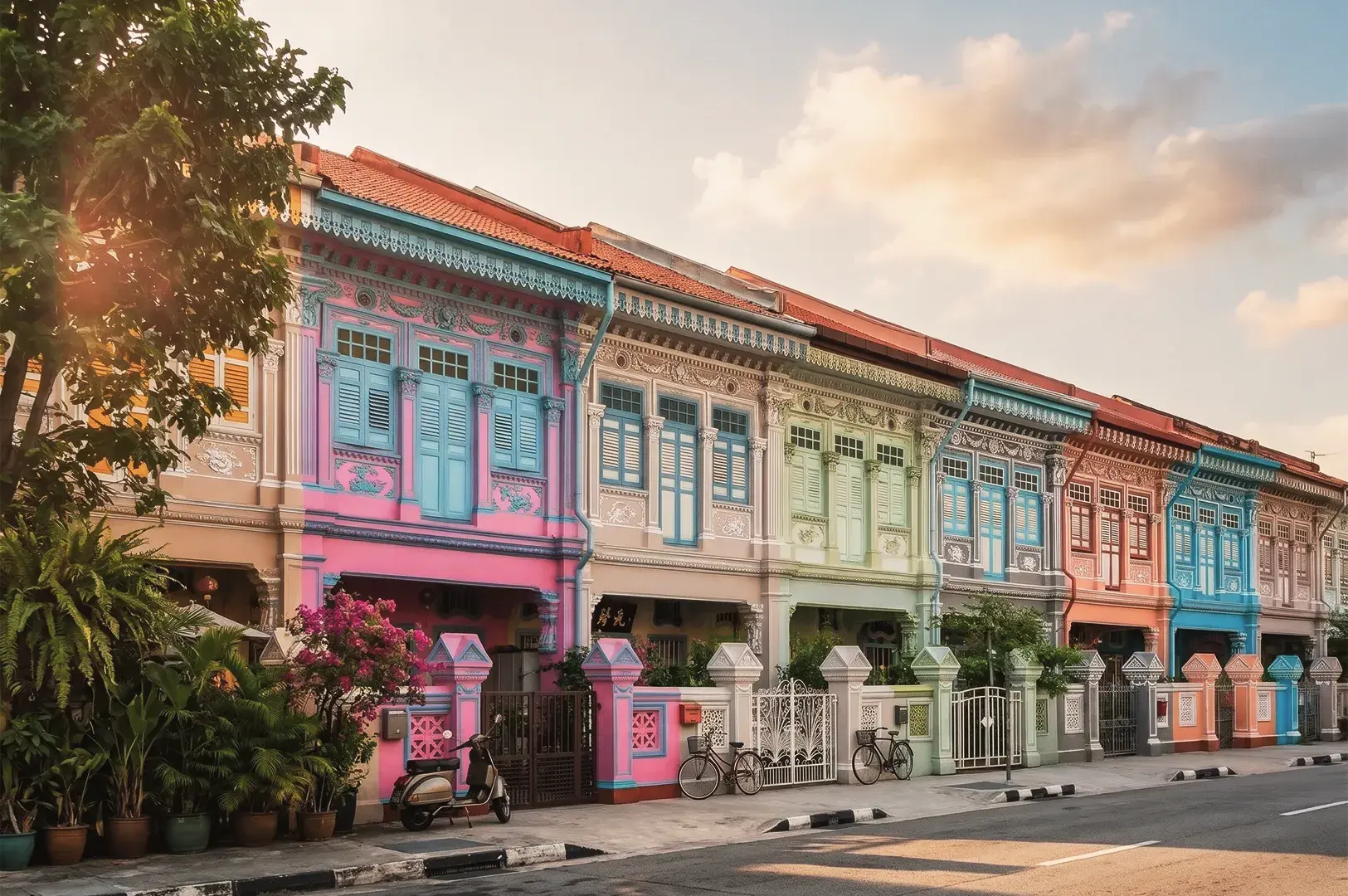
Joo Chiat was once part of a coconut plantation before it grew into a suburban enclave. Today, it’s a conservation area gazetted in 1993, one of several other parts of Singapore beyond the old city centre where pre-war shophouses formed the urban fabric, filled with two-story shophouses and terrace houses in Transitional, Late, and Art Deco styles.
Koon Seng Road is the famous stretch, and the pastel facades deserve their admirers. But I find the quieter rows more absorbing. Along Joo Chiat Place, look for the traditional pintu pagar, the half-length swing doors that once let air in while keeping privacy. On Joo Chiat Road, Katong is known for ornate shophouses, and one row from 1928 carries plasterwork and timber fretwork that rewards a long, slow look.
Remember that many of these buildings are homes. I walk quietly here.
My slow route: Joo Chiat Road → Koon Seng Road → Tembeling Road → Joo Chiat Place. Allow about two hours, ideally in the early morning, before the heat builds. Start with breakfast and end with coffee.
Chinatown: Telok Ayer, Ann Siang, and Club Street
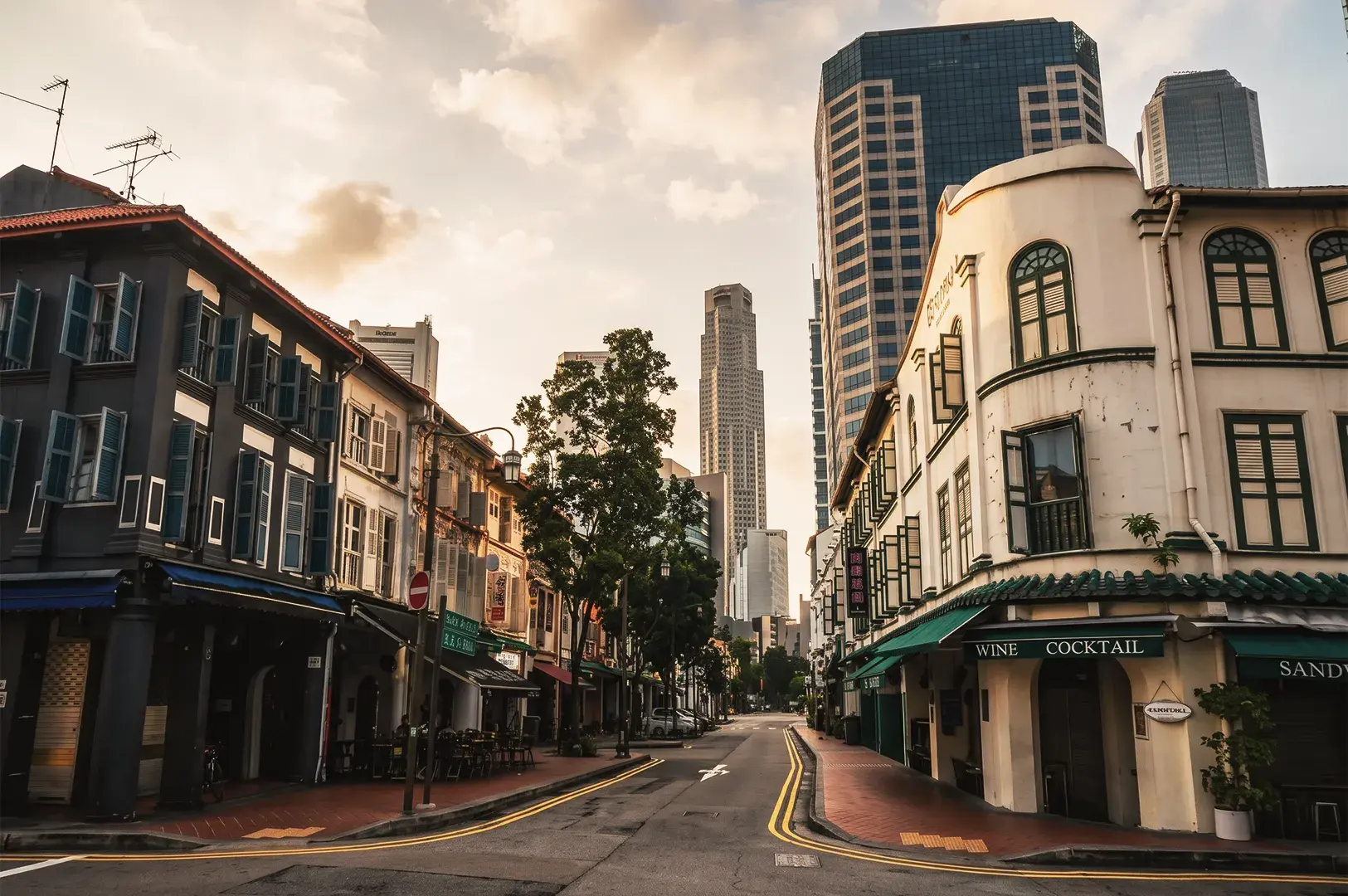
Chinatown was Singapore’s original Chinese settlement, and its shophouses still reflect the lives of early immigrant communities. Telok Ayer developed as part of early colonial Singapore and was home to both Hokkien and South Indian communities. If you keep walking, South Bridge Road is another historic Chinatown thoroughfare lined with notable shophouses. That mix is the first lesson. Shophouses in Singapore were never only Chinese.
I like walking from Telok Ayer up to Ann Siang Hill and along Club Street. Here, shophouses sit beside temples and clan associations, and that relationship between commerce, faith, and community is the real story. The buildings at 15–23 Club Street are among Chinatown’s oldest survivors. They once housed specialist trades, including idol carving.
Today, the same street holds restaurants and offices. Nothing about that feels like a loss. It feels like continuity.
Kampong Glam: Beyond Haji Lane
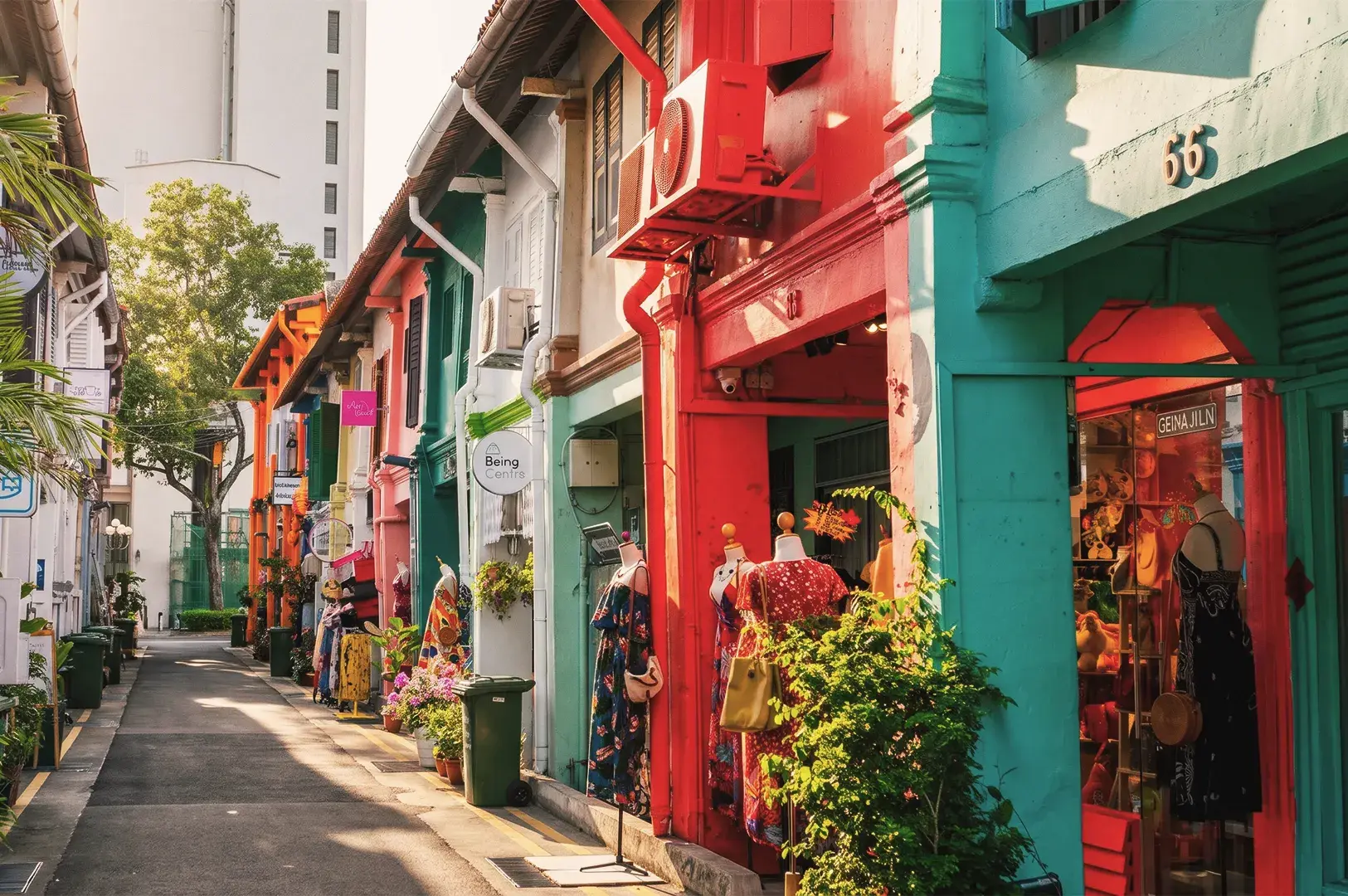
Kampong Glam was once the seat of Malay royalty. Its history is bound up with Malay, Arab, Bugis, and Javanese communities, along with textiles, publishing, and Muslim education. It is especially known for shophouses near the Sultan Mosque. Most of its shophouses are two-story Early and Transitional buildings.
Haji Lane is where many visitors stop, and some of the area’s earliest shophouses do stand there. But the lane is only one chapter. I prefer a wider loop: Arab Street → Sultan Gate → Bussorah Street → Haji Lane, then into the side streets around them.
Notice the businesses as much as the buildings. A textile shop or an old trader tells you more about Kampong Glam than any mural. Here, a conserved shophouse is never just architecture: it can hold long-running community businesses or newer uses like boutique hotels while still recording the community around it.
Little India: Architecture, Food, and Faith
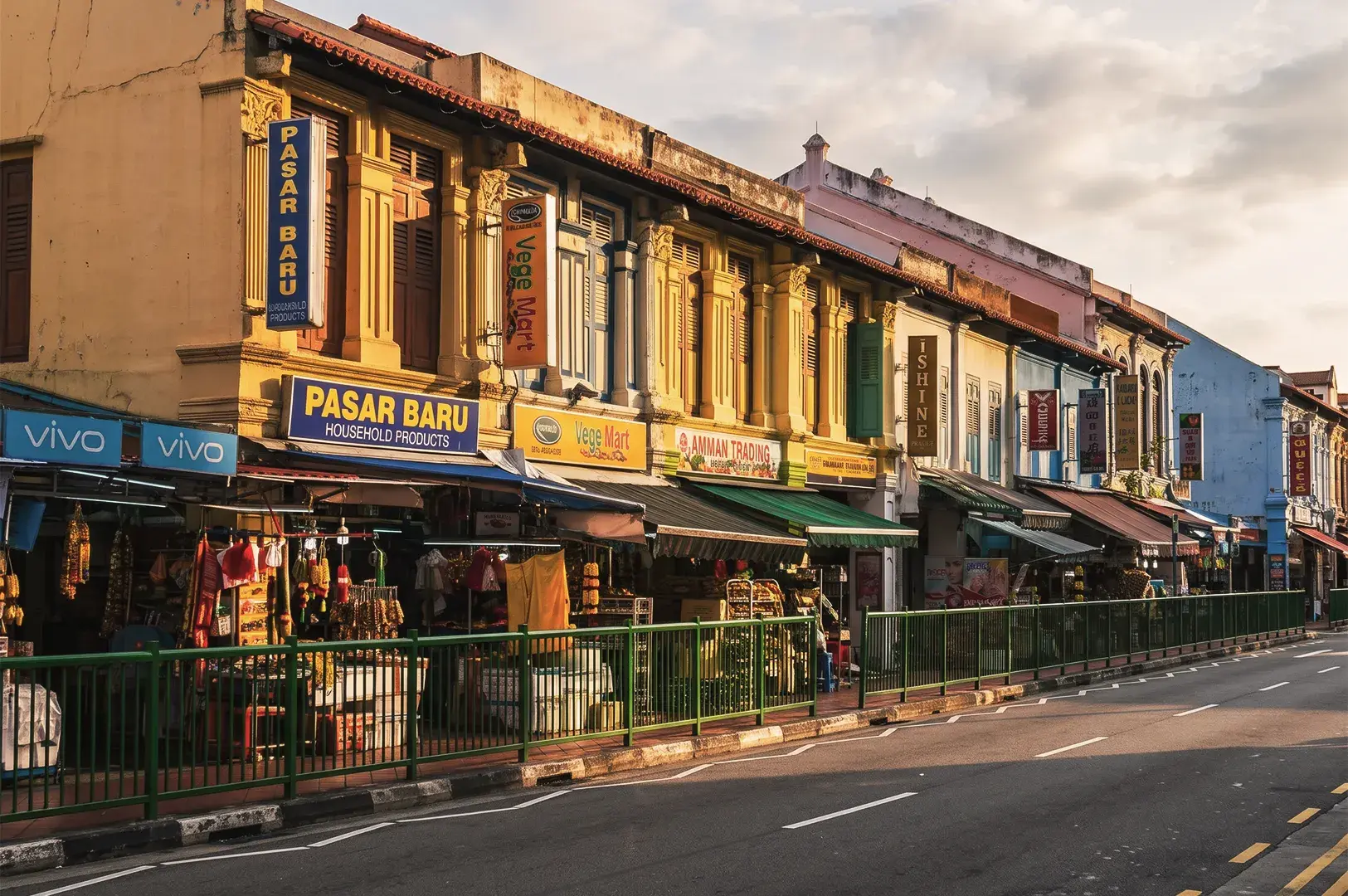
Little India holds shophouses spanning the Early period through Art Deco. They sit within a much larger cultural landscape, alongside temples, a mosque, and churches, all within a short walk of one another. Many old shophouses in the district can also be found along Jalan Besar.
Around Little India MRT, the colourful shophouses set the tone before my usual route runs along Serangoon Road, then down Dunlop Street. It’s a sensory walk, with spice, flowers, music, and the constant traffic of shoppers. Little India is far livelier than Joo Chiat. In this neighborhood, looking up at a facade often leads you to look around at the street life below.
Emerald Hill: The Quiet Version
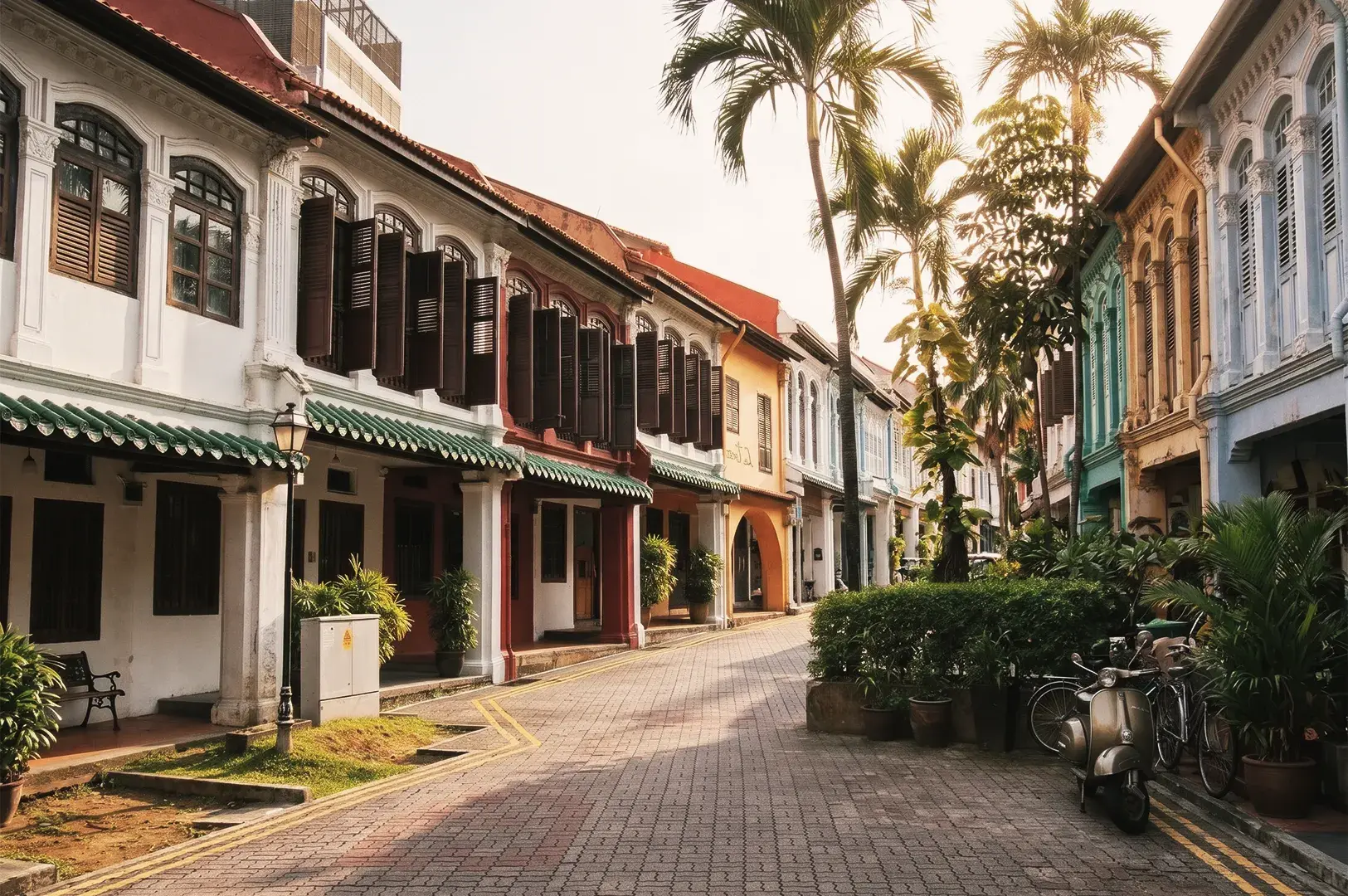
When I want stillness, I go to Emerald Hill, an upmarket enclave of restored shophouses. Another former plantation, it was subdivided at the turn of the 20th century into a residential enclave for wealthy Chinese and Straits Chinese families.
The architecture here is often called “Chinese Baroque.” It brings together ornate pintu pagar, ceramic tiles, elaborate plasterwork, carved wood, and french windows. Emerald Hill includes both terrace houses and shophouses, so not every building here fits the definition.
It’s a short walk, under an hour for most people, and far calmer than Chinatown or Kampong Glam. It’s the perfect place to practice the habit of slowing down.
The Key Elements to Notice
When I walk a shophouse street now, I look up, then down, then inside.
Look up first. Find the common party walls. These shared structural walls often rise slightly above the roofline, dividing a long row into individual lots. Once you spot them, you can begin to see how individual shophouse units were divided along the row.
Study the upper floors. Timber windows, louvered shutters, and decorative vents were all designed for airflow long before air conditioning, and a typical shophouse also relied on internal air wells for ventilation. Some shophouse facades are restrained, while others are layered with plaster garlands, pilasters, and glazed tiles. This is where colorful shophouses earn their reputation, but the color is only the surface. The real craft lies in the detail.
Then look at the ground floor. This is where history stays alive. A shophouse built a century ago might now hold a café, a textile shop, a clan association, an architect’s studio, or someone’s home. The building remains, and its use keeps changing.
Conserved, Not Frozen
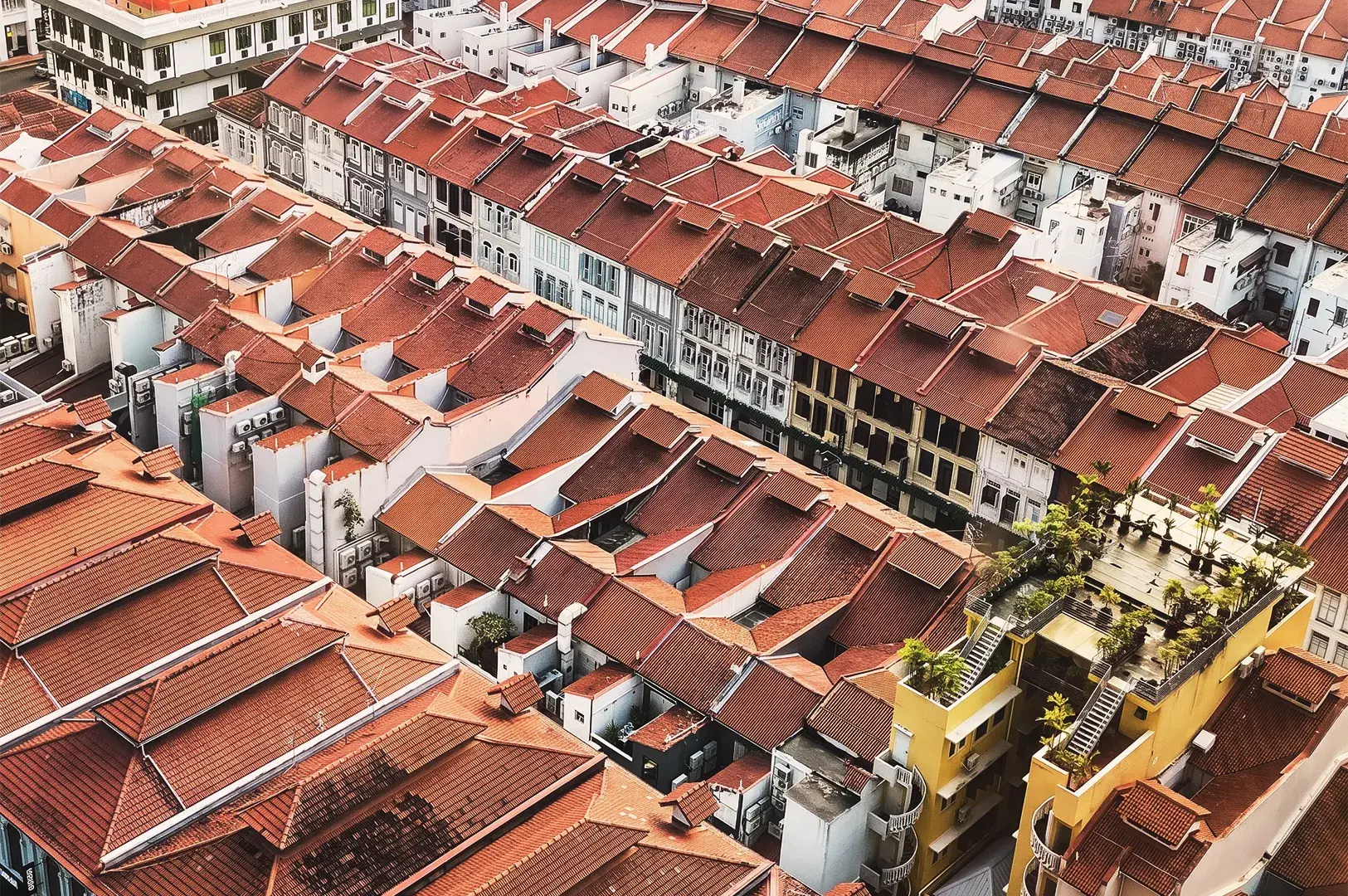
The most interesting thing about Singapore shophouses isn’t their age. It’s that they’re still useful.
Conservation here doesn’t mean sealing a street in amber. It means a building is carefully restored and allowed to keep working, as a home, a shop, a studio, or a restaurant, while its character stays intact. That’s why these streets feel alive rather than staged.
Many conserved shophouses are now valuable commercial assets: onserved shophouses have also become valuable commercial and residential properties.
Two misconceptions are worth letting go:
- Not every colorful old building is a shophouse. Historic districts also include temples, clan houses, warehouses, schools, and terrace houses.
- Shophouses aren’t exclusively Chinese. Malay, Arab, Indian, Peranakan, and European influences all shaped these streets.
Today, conservation guidelines shape how these buildings are adapted for new uses without losing the features that make them distinctive. A typical shophouse requires quality restoration that respects its key architectural elements.
How to Photograph Respectfully
Photograph the details: a tile panel, a shutter, the rhythm of a five foot way. These often say more than a wide shot of a whole row.
But remember that many shophouses are private homes, especially in Joo Chiat and Emerald Hill. Don’t block doorways, peer through windows, or photograph residents without asking. Keep your voice low. Observe without taking over.
Choosing One Street
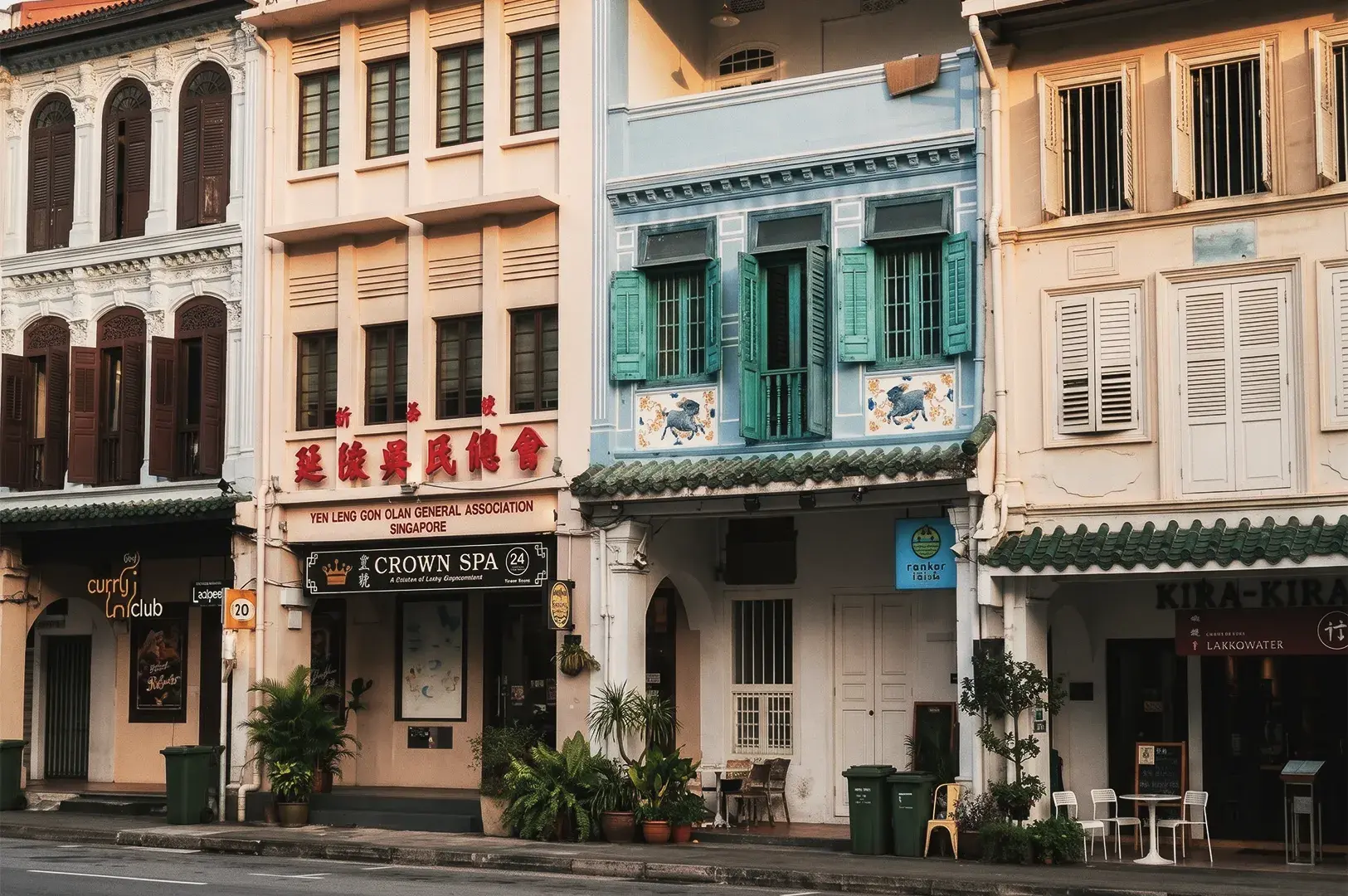
My best advice is simple. Don’t try to see them all. Pick one neighborhood and walk one street slowly enough to notice something you’d otherwise have missed, such as a worn tile, a repainted shutter, or a doorway that has served three different trades.
If you’d like to build a whole trip around this pace, here’s a slow way to experience Singapore’s historic streets and neighborhoods.
Walk slowly enough, and Singapore’s old streets stop looking like heritage. They start looking lived in.