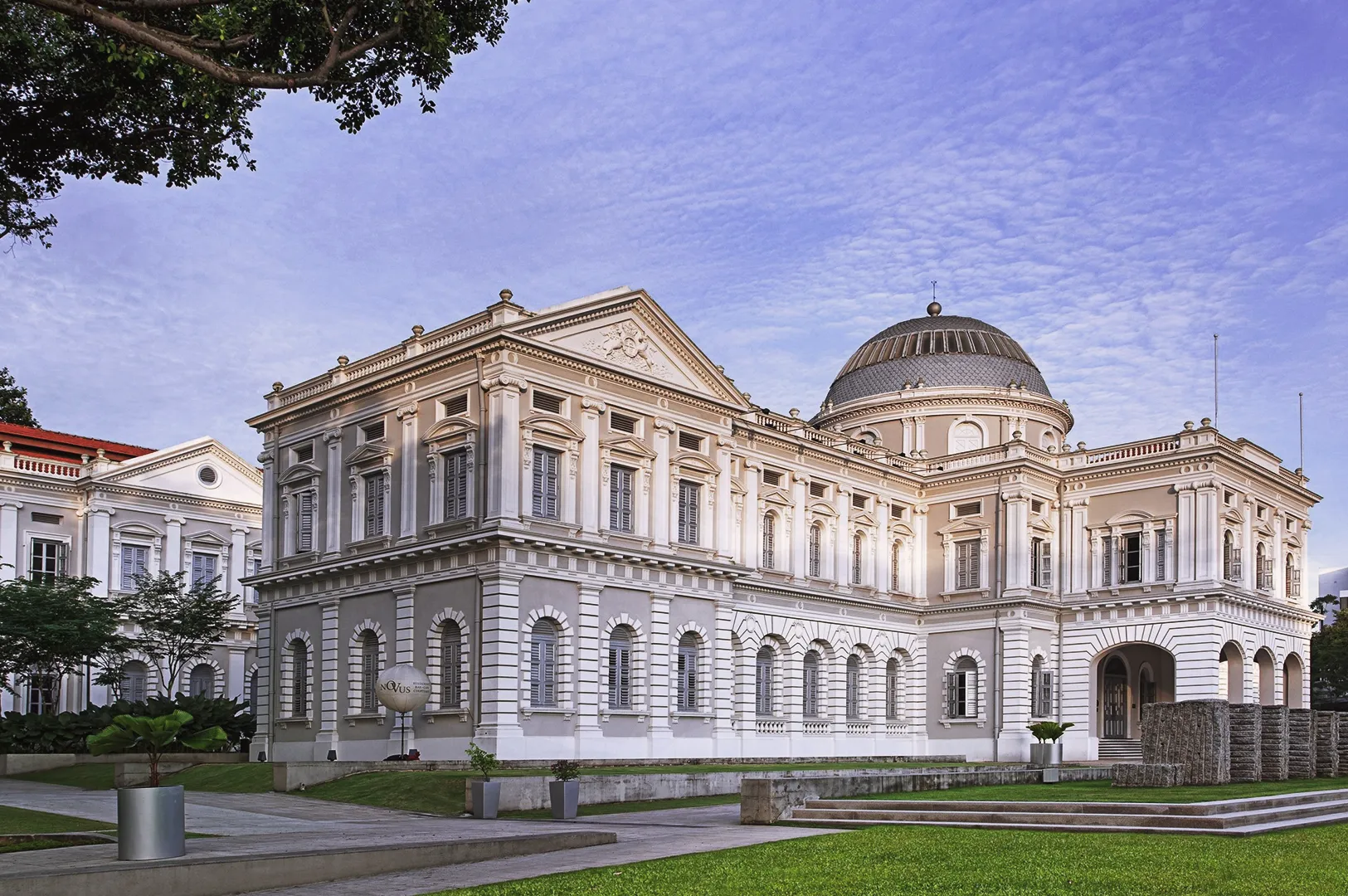
The National Museum of Singapore is the city’s oldest museum, at 93 Stamford Road, and one of the best places to understand Singapore before you start moving through it. The first time I visited, I treated it like every other stop on my list. I arrived, found the highlights, took a few photographs, and left within the hour. Back out on Stamford Road, I realized I hadn’t really seen anything.
I’ve returned many times since, and I come differently now. I don’t come to finish the museum. I come to slow down before the city speeds me up again. For travelers and visitors who want a more thoughtful understanding of Singapore, its galleries, architecture, and immersive exhibits give the city historical context that changes how the rest of it looks.
If you’re shaping a list of things to do in Singapore around moments like this, these are the places I keep returning to. And if you’d like to build whole days at this pace, here’s a gentler way to travel through Singapore.
Getting to the National Museum of Singapore
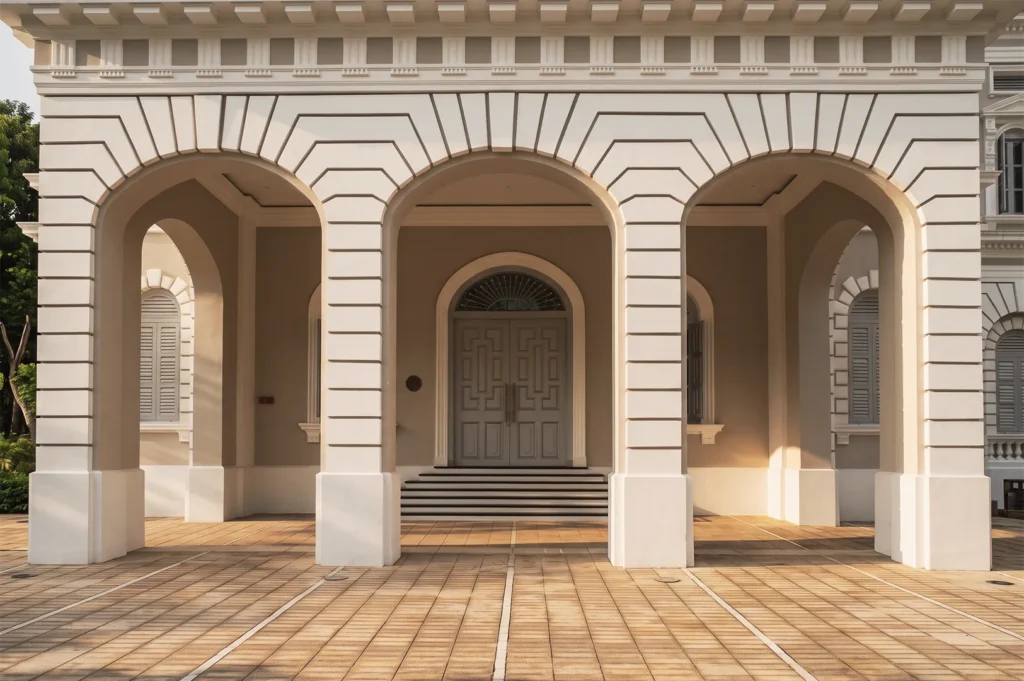
The National Museum of Singapore sits at 93 Stamford Road, Singapore 178897, at the edge of the Civic District.
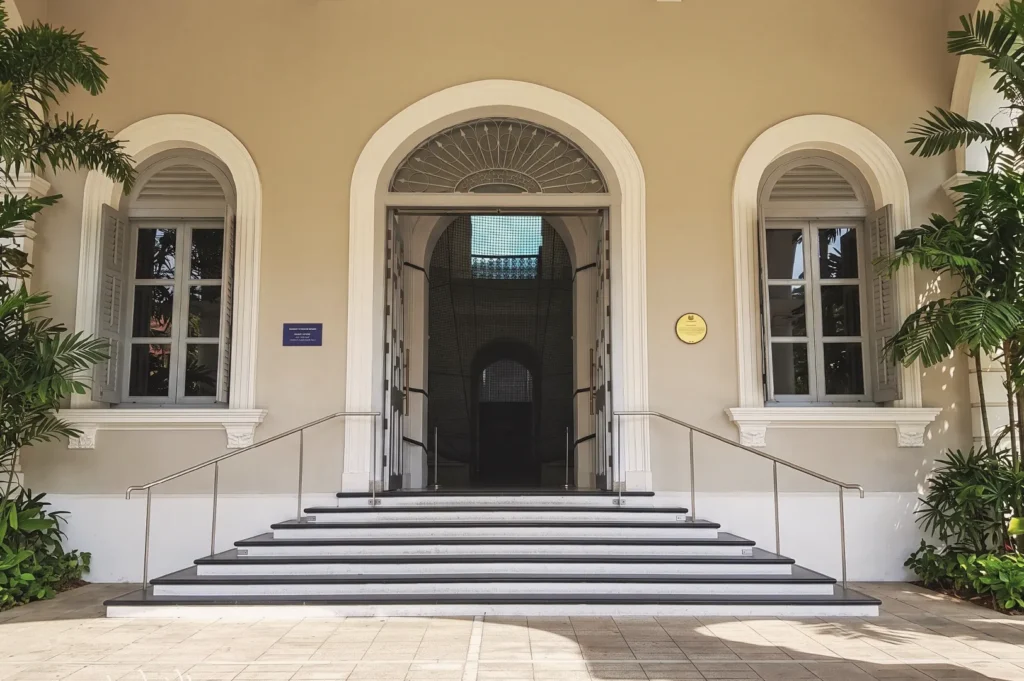
The nearest station is Bras Basah MRT (CC2) on the Circle Line. From there, it’s an easy walk of roughly five to seven minutes, depending on your exit. You’ll see the white façade before you’ve fully decided you’ve arrived.
Other stations work too, depending on where you’re staying:
- Bencoolen MRT on the Downtown Line
- Dhoby Ghaut MRT on the North-South, North-East, and Circle lines
- City Hall MRT if you’re already near the Civic District
If you’re driving, plan ahead. The museum’s own car park is currently closed. Nearby alternatives include Fort Canning Park, Singapore Management University, Lazada One, and the YMCA. Honestly, I’d skip the car. The MRT is simpler, and the walk in is part of the pleasure.
When to Visit
I prefer a weekday morning, arriving close to the 10am opening. The streets are cooler, the galleries feel spacious, and you have the whole day ahead of you instead of behind you.
Better still are the museum’s Quiet Mornings. On the first Saturday of the month, and on the first and third Thursday, the doors open early at 9am. If you want the building at its most contemplative, this is the hour.
One mistake I made early on: I assumed a rainy afternoon would mean an empty museum. It doesn’t. When the skies open, it can feel as if half the city has had the same idea. A rainy weekday morning beats a rainy weekend afternoon every time.
Look at the Building Before the Exhibitions
Most visitors walk straight through the entrance in search of the first gallery. I’d ask you to pause instead.
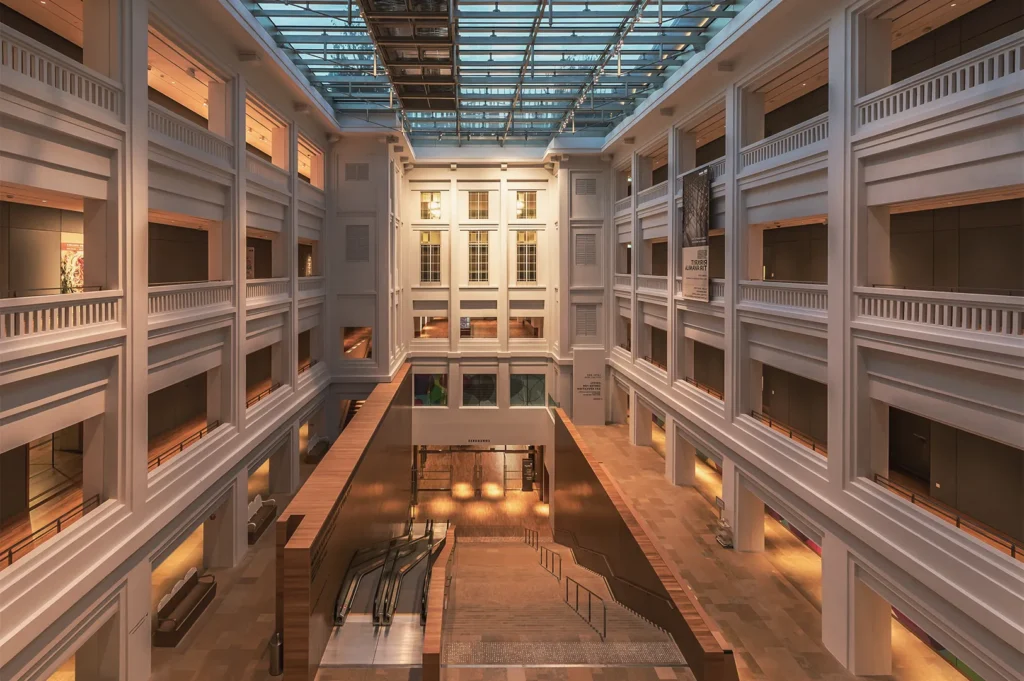
The institution traces its history to the early 19th century: the Singapore Library opened in 1845 and began collecting artefacts soon after, while the present museum building opened in 1887 as the Raffles Library and Museum. The building was declared a National Monument in 1992, and it shows. Its 19th-century neo-Palladian architecture is formal and composed, the kind of design built to make a statement about permanence.
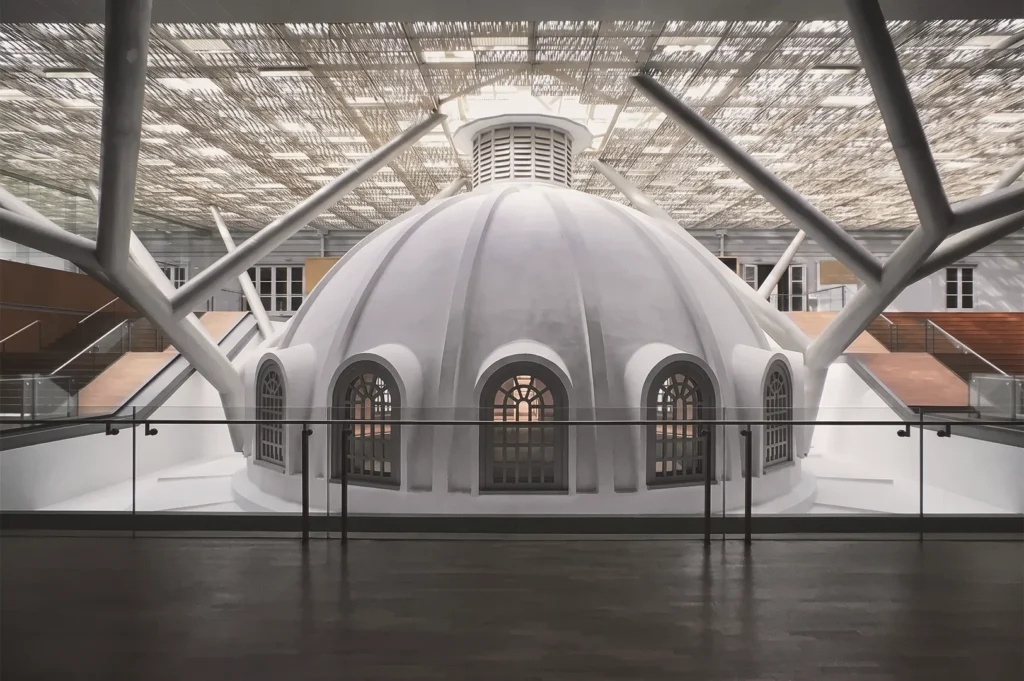
Then look up at the Rotunda Dome. The original rotunda dates to 1887, and the dome is clad in zinc fish-scaled tiles. Afterward, find the place where the old building meets the modern glass-and-metal extension. That meeting point says something about Singapore itself: it keeps its past without being frozen inside it. The modern extension includes the Shaw Foundation Glass Rotunda, and later renovations adapted the museum for modern displays.
Give the architecture fifteen or twenty minutes. It sets the tone for everything that follows.
The Singapore History Gallery, Reopened
This is a particularly good moment to visit. The Singapore History Gallery reopens on 10 October 2026 after its first full revamp since 2006. On earlier visits, I’ve walked past it while it was being reworked, so seeing it open again feels like a door unlocking.
The new gallery spans more than 700 years, from the 14th century to the present. It weaves together artifacts, new research, personal stories, and interactive moments.
From the British Empire to the Lee Kuan Yew Years
The broad arc is one many visitors arrive half-knowing: colonial rule, the Japanese Occupation, independence, and the making of modern Singapore. For most of us, that last chapter lives in a handful of names, with Lee Kuan Yew chief among them.
The Singapore Stone is one of the key objects that helps anchor that story from colony to independent nation.
What the gallery does well is make those headlines feel human. Visitors consistently describe the museum as one of the clearest places to understand how the city became what it is.
Ordinary Objects, Extraordinary Weight
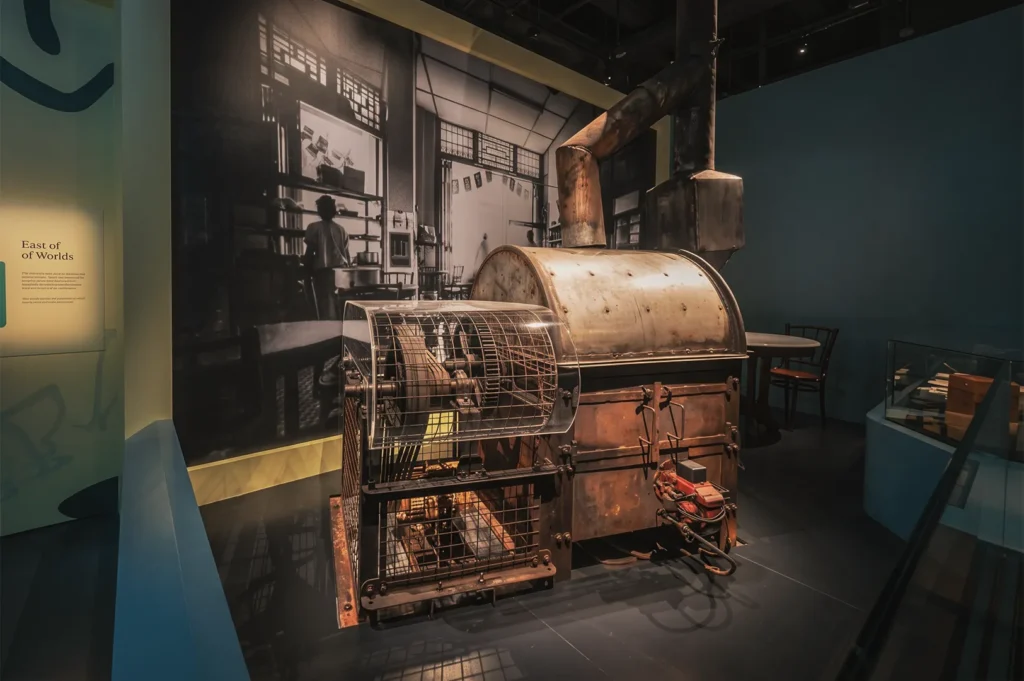
The details I’m most drawn to are the small ones. Among the reported highlights are a restored 1970s HDB lift and a traditional Nanyang coffee roasting machine.
These aren’t grand objects, and that’s exactly the point. National history isn’t only treaties and wars. It’s also the lift you rode home in and the coffee that started your morning. After seeing them, I find I look at an HDB block or a kopitiam differently.
That’s the quiet case for this place. Most travelers rush out to see Singapore. I think it’s worth spending a few hours first understanding what you’re about to look at. Below, you’ll find what to see here, how to get to the museum, the best time to visit, admission and accessibility details, standout spaces like the Singapore History Gallery and Singapore Odyssea, special events, practical tips, and where to go after your visit.
Singapore Odyssea
Before or alongside the main gallery, you’ll find Singapore Odyssea: A Journey Through Time, an immersive multimedia experience that uses sound, light, and movement to tell the island’s story.
Reactions vary. Some visitors love it, while others find immersive displays less satisfying than objects behind glass, especially when visiting alone. My advice is simple: don’t rush through it just because it’s technology. Notice how the story is being told, not only what it says.
Stories of Everyday: 10–18 October 2026
The reopening coincides with the museum’s 139th-anniversary celebrations, Stories of Everyday, which run from 10 to 18 October 2026. Expect installations, an art market, performances, workshops, and special programs; the museum also stages exhibition programming such as In an Instant, an exhibit on the history of Polaroid photography.
If you’re in town this week, it’s worth catching. Still, don’t let the program fill every hour. Choose one or two things, then leave room to wander.
A Note on What’s Still Closed
The museum is reopening in phases. The Level 2 galleries, including the Life in Singapore galleries and the Goh Seng Choo Gallery, remain closed until Q1 2027. Older guides may still describe them as open, so check what’s accessible on your date before you go.
What You Need to Know
Opening hours: Daily, 10am–7pm. Last ticket sales are at 6pm, and last admission to the galleries and Singapore Odyssea is 6:30pm.
Admission:
- S$20 for adults
- S$15 for concessions, including eligible seniors aged 60+, students, and persons with special access requirements
- Free admission to the permanent galleries for Singapore citizens and permanent residents
- Free for children aged 6 and under
The museum is running free anniversary programmes from 10–18 October 2026; check the official ticketing page for whether general admission is complimentary on your visit date.
How long to stay:
- Quick visit: 1.5–2 hours, focused on the History Gallery
- Comfortable visit: 2.5–3 hours, with time for the architecture and Odyssea
- Slow visit: 3–4 hours, including a long pause and lunch
Accessibility: Concession pricing covers visitors with special access requirements, and Quiet Mornings offer a calmer setting. Some gallery spaces also have seats, which help if you want to pause during a longer visit. If you have specific mobility or sensory needs, check the museum’s visitor information before you go.
Food: Dame, on the first floor, serves food and refreshments. I like to pause there between the galleries and the walk outside.
What to Bring
- A light layer. The galleries are climate-controlled, and they can feel cool after the heat outside.
- A small bag. Bulky items aren’t allowed in the galleries; lockers are available for belongings.
- Your phone, set to silent. Photography is permitted subject to gallery rules; flash and selfie sticks are not allowed in the galleries.
- Water for later. Food and drinks aren’t allowed inside the galleries.
My Personal Anecdotes
Don’t read every label. This was my biggest early mistake. Try to discover a few objects and stories in depth rather than reading everything, then let them hold you longer than an itinerary would allow.
Consider one guided tour. If you pay for anything extra, pay for interpretation. A good docent can turn an object into a story, pique your interest, and help you understand the relationships between what you’re seeing and the larger story.
Sit down halfway. Find a bench or one of the available seats, and let what you’ve seen settle before you move on.
Photograph the building, not just the exhibits. The façade, the dome, and the interiors capture the museum’s atmosphere better than most gallery shots.
Then Walk Out to Fort Canning
When you leave, don’t hail a cab to the next attraction. Walk. Fort Canning sits just beside the museum, and from there the Civic District and Bras Basah unfold around you.
This is where the visit pays off. A shophouse is no longer just a pretty building. You find yourself asking who built it, who lived there, and what survived. The city outside hasn’t changed while you were inside, but you see it differently.
The National Museum of Singapore doesn’t simply tell you the city’s story. It gives you just enough context to read the streets for yourself, and to place Singapore within Asia and the wider world. Give it an afternoon. Look at fewer things more carefully. Then step back outside, and let the local story begin.