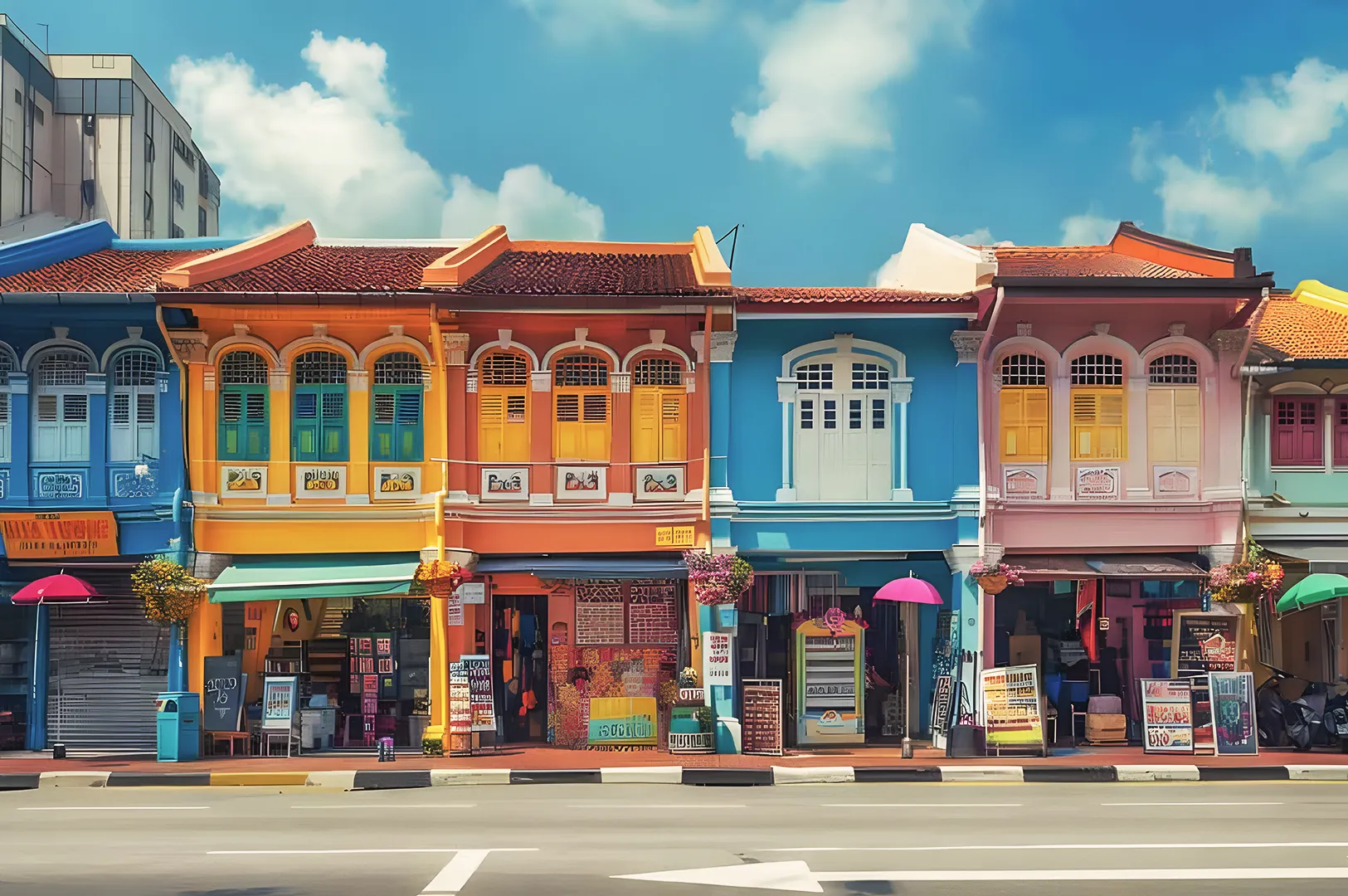
There are days when Singapore feels less like one city and more like a collection of places layered on top of each other.
Walk far enough through Chinatown and the language on the shop signs changes. Follow the smell of incense into a temple. Sit down for a bowl of noodles, and suddenly the afternoon feels very far from the glass towers and traffic outside.
You haven’t left Singapore.
But for a little while, you don’t quite feel as though you’re in the Singapore you know.
That is the pleasure of this kind of day.
Rather than trying to recreate China, Singapore offers something more interesting: a glimpse into the Chinese traditions, foodways, architecture, and everyday rituals that have become part of the city itself.
Where Would You Begin?
Start slowly.
Chinatown is an obvious place, but it rewards wandering more than rushing. The streets around the historic shophouses are a reminder that Singapore’s Chinese heritage isn’t confined to museums or heritage plaques.
Look up.
Look into the small shops.
Notice the details around the temples.
And, most importantly, don’t make the mistake of treating the neighbourhood as something to tick off before lunch.
Let the morning stretch.
Have breakfast somewhere simple. Walk a little further than you intended. Sit with a coffee. Watch deliveries arrive and shutters open.
The experience becomes less about seeing Chinatown and more about being in it.
Could Food Take You Further?
Food is probably the easiest way to travel somewhere without going anywhere.
A bowl of noodles, dim sum, congee, or a plate of roast meat can carry memories of another place — even when the meal itself has become distinctly Singaporean.
That distinction matters.
Singapore’s food culture is not a replica of China. It is the result of generations of migration, adaptation, and local influence.
And perhaps that makes it more interesting.
You are not simply tasting another country.
You are tasting what happens when cultures settle somewhere and make themselves at home.
What If You Wandered Instead of Sightseeing?
After lunch, resist the urge to move on immediately.
Singapore is remarkably compact, which makes it easy to build a day around walking.
Take the longer route.
Follow the shophouses.
Pause when something catches your attention.
This is also the philosophy behind our guide to the places we return to when we want to feel Singapore slowly — choosing familiar streets and everyday places over trying to exhaust a destination in a single day.
And Then Stay Until Evening
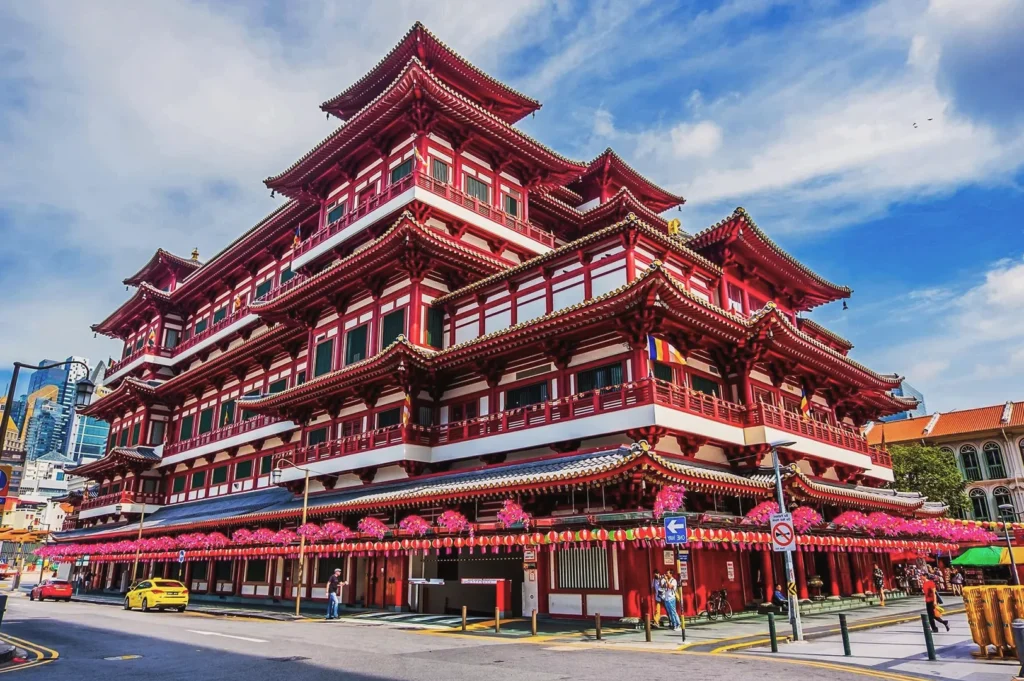
Majestic Buddha Tooth Relic Temple in Chinatown, Singapore, showcasing traditional red and white pagoda architecture with golden roof details and festive lantern decorations.
As the afternoon fades, Chinatown changes again.
The heat softens. Lights appear in the shops. Restaurants become busier.
You could finish the day with dinner, but there is no need to make the ending complicated.
Perhaps that is the whole point of leaving Singapore without leaving Singapore.
You don’t need a flight.
You don’t even need a new neighbourhood every hour.
Sometimes all it takes is a different corner of the city, a meal you haven’t had in a while, and enough time to notice the layers that were already there.
Singapore has always contained more than one story.
You just have to slow down enough to find another one.