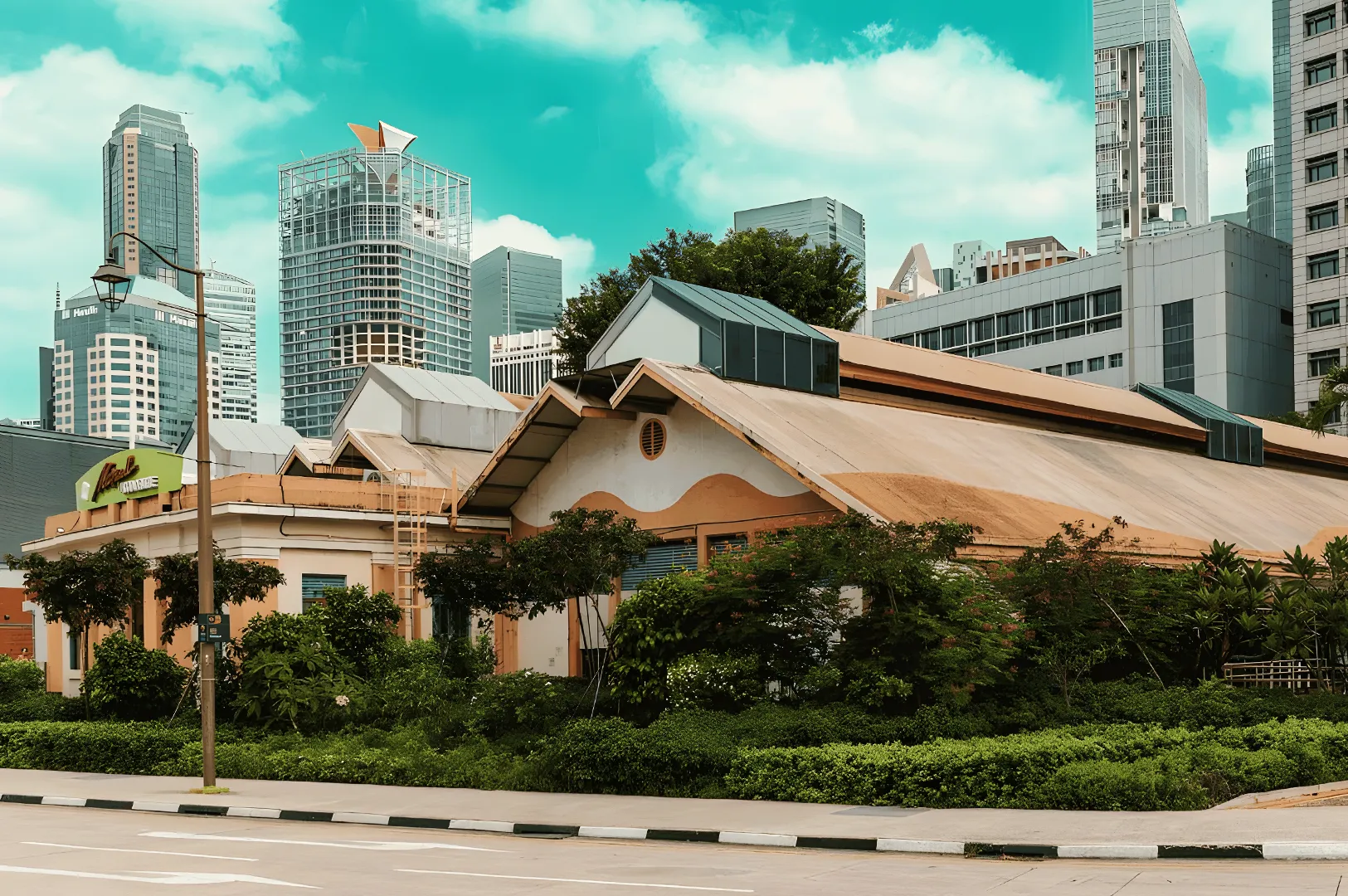
Singapore has plenty of places that look impressive.
There are gardens that seem almost futuristic, buildings that dominate postcards, shopping streets that stay bright long after sunset.
But if you wanted to understand the city rather than simply admire it, where would you go?
Perhaps not to the skyline.
Perhaps you’d sit down at a hawker centre.
Because something interesting happens there.
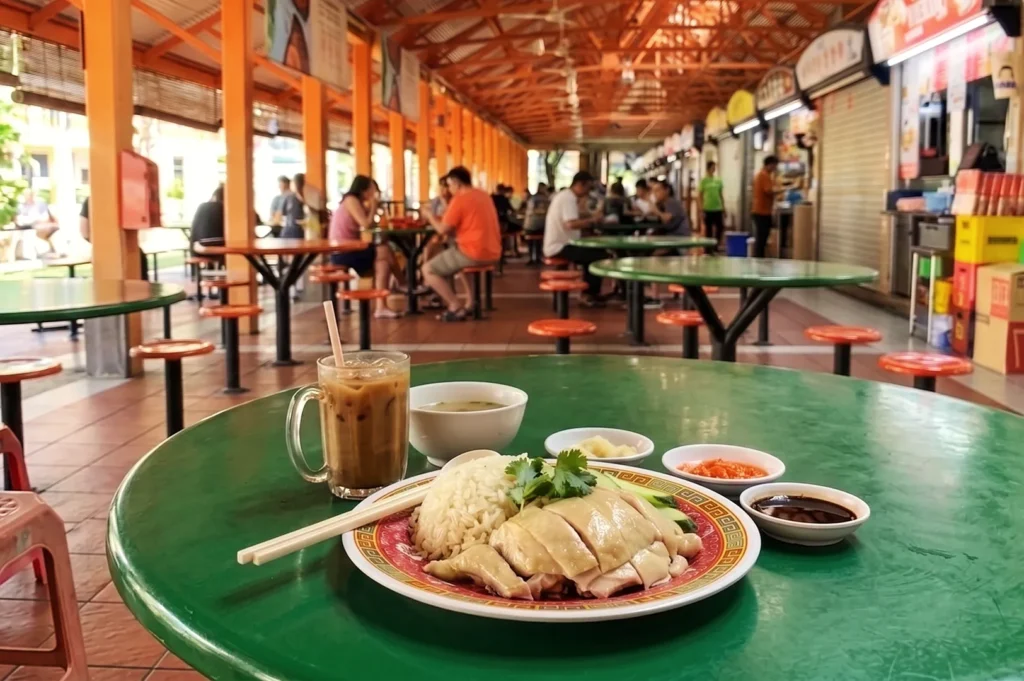
People who might otherwise never share the same space sit around the same tables. Office workers eat beside retirees. Families arrive with children. Someone is having breakfast while another person is already thinking about lunch.
Nobody seems particularly interested in making the moment look impressive.
And perhaps that’s exactly why it matters.
What Does a Hawker Centre Actually Tell You About Singapore?
A hawker centre is easy to misunderstand.
From the outside, it can look like nothing more than a collection of inexpensive food stalls.
But spend an hour there and you start noticing something else.
It is a place of routine.
People return to the same stalls. They know what they want. They recognise faces. They have preferences that have probably taken years to develop.
There is an almost invisible social rhythm to it.
The word conviviality describes the quality of being friendly, lively, and enjoyable in company.
That feels surprisingly close to what makes a good hawker centre memorable.
Not because everyone is talking to everyone else.
But because people are sharing a space without needing an occasion to do so.
What If You Stopped Treating Lunch Like a Task?
This is where visitors can miss something.
You arrive.
Find the famous stall.
Queue.
Take a photograph.
Eat.
Leave.
You’ve technically experienced a hawker centre.
But you haven’t necessarily experienced the place.
Try something different.
Order one dish.
Sit down.
Don’t immediately check where you’re going next.
Watch the tables around you.
Notice the stallholders.
Listen to the sounds of trays, conversations, fans, cooking and footsteps.
Stay for another drink.
Let lunch become the destination.
If you’re looking for places where this slower approach works particularly well, our guide to the best hawker centres in Singapore is a useful starting point — not simply for what to eat, but for the different sides of the city each centre can reveal.
Why Do We Remember Some Meals More Than Others?
It isn’t always the food.
Sometimes it is where you ate it.
The plastic table.
The ceiling fan.
The person sitting opposite you.
The rain beginning outside.
The conversation that continued long after the plates were empty.
Singapore’s hawker culture is deeply connected to everyday life, which is why the experience can feel so different from eating at a restaurant designed specifically to impress visitors.
Nothing needs to happen.
And that is the beauty of it.
A hawker centre doesn’t ask you to be fascinated.
It simply gives you somewhere to sit.
Maybe This Is What Singapore Looks Like Without the Gloss
Every city has an image it presents to the outside world.
Singapore has plenty of polished ones.
But beneath them is another city — one built around breakfast stalls, coffee shops, wet markets, neighbourhood routines and meals that people eat because they are hungry, not because they are fashionable.
That Singapore can be harder to photograph.
It is also much easier to remember.
So if you want to understand the city, don’t only look up at the skyline.
Sit down somewhere busy. Order something simple. Stay longer than you planned.
You might discover that Singapore’s most revealing landmarks aren’t always the ones made of glass and steel.
Sometimes they’re the places where someone has been making the same dish for twenty years, and half the room already knows their name.